

Introduction to CMMC Compliance
In today’s interconnected world, cybersecurity is no longer a luxury, but a necessity, especially for organizations working with the U.S. Department of Defense (DoD). The Cybersecurity Maturity Model Certification (CMMC) is a unified standard designed to protect sensitive unclassified information (SUI) and controlled unclassified information (CUI) within the Defense Industrial Base (DIB) supply chain. This comprehensive guide will delve into the intricacies of CMMC compliance, outlining its importance, framework, requirements, and the steps needed to achieve it.
What is CMMC?
The CMMC is a certification program that measures and verifies the cybersecurity maturity of DoD contractors and subcontractors. It establishes a tiered framework of cybersecurity standards, ensuring that organizations handling government information have appropriate safeguards in place. Unlike previous self-attestation models, CMMC requires third-party assessments and certifications, providing greater assurance of compliance.
Importance of CMMC Compliance
CMMC complianceis not just a checkbox; it’s a critical requirement for any organization wanting to participate in DoD contracts. Beyond maintaining eligibility for contracts, CMMC compliance offers several key benefits:
- Protecting Sensitive Information: CMMC safeguards SUI and CUI, preventing data breaches and protecting national security.
- Building Trust: Certification demonstrates a commitment to cybersecurity, enhancing your organization’s reputation and building trust with partners and clients.
- Competitive Advantage: CMMC compliance can be a differentiator, giving your organization a competitive edge in bidding for DoD contracts.
- Strengthening Cybersecurity Posture: Implementing CMMC requirements strengthens your overall cybersecurity posture, reducing your risk of cyberattacks.
Understanding CMMC Framework
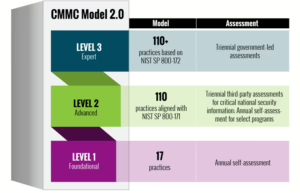
The CMMC framework comprises five maturity levels, each building upon the previous one. These levels represent the progressive implementation of cybersecurity practices and processes. Understanding the required level for your organization is crucial for effective preparation.
CMMC Levels Explained
- Level 1 – Organizations will need to meet basic cyber security hygiene by implementing 17 safeguarding controls as noted in FAR 52.204-21, which is a preexisting clause in DoD contracts. These controls fall into six domains, which are: Access Control, Identification and Authentication, Media Protection, Physical Protection, System and Communications Protection and System and Information Integrity.
- Level 2 – Organizations will need to meet the requirements of NIST SP 800-171. These controls already exist under DFARS 252.204-7012 clause.
- Level 3 – Organizations will need to meet a subset of requirements within NIST SP 800-172 – although these are yet to be defined. It’s presumed these requirements will help companies protect against advanced persistent threats (APTs).
Key NIST Standards in CMMC
The CMMC framework heavily leverages existing NIST (National Institute of Standards and Technology) standards, particularly NIST SP 800-171, which provides guidance on protecting CUI. Understanding these standards is essential for achieving compliance.
Requirements for CMMC Compliance
CMMC compliance involves meeting specific security requirements at each level. These requirements encompass various domains, including:
Basic Security Requirements (e.g., Level 1):
- Access Control
- Identification and Authentication
- Media Protection
- Physical Protection
- System and Communications Protection
Advanced Security Requirements (e.g., Level 3 and above):
- Risk Assessment
- Security Awareness Training
- Incident Response
- System and Information Integrity
- Configuration Management
Achieving CMMC Compliance
Navigating the CMMC landscape can be complex. A structured approach is crucial for successful certification.
Steps to Prepare for a CMMC Assessment:
- Determine Your CMMC Level: Identify the required CMMC level based on your contracts and the type of information you handle.
- Gap Analysis: Conduct a thorough assessment of your current security posture against the CMMC requirements.
- Develop a Plan of Action and Milestones (POA&M): Outline the steps needed to address any identified gaps.
- Implement Security Controls: Implement the necessary security controls and practices as per your target CMMC level.
- Document Your Implementation: Maintain detailed documentation of your security controls and processes.
- Prepare for the Assessment: Engage a C3PAO (Certified Third-Party Assessor Organization) to conduct the assessment.
- Undergo the Assessment: Participate in the CMMC assessment process.
- Remediate Any Findings: Address any deficiencies identified during the assessment.
- Maintain Compliance: Continuously monitor and improve your security posture to maintain compliance.
Common Challenges in Compliance
- Understanding the Requirements: The complexity of the CMMC framework can be challenging to navigate.
- Resource Constraints: Implementing CMMC requirements can be resource-intensive, particularly for small and medium-sized businesses (SMBs).
- Maintaining Compliance: Continuous monitoring and improvement are essential for maintaining compliance, which can be an ongoing challenge.
Benefits of CMMC Compliance
Beyond the mandatory aspect of DoD contracting, CMMC compliance provides significant benefits:
- Enhanced Cybersecurity Posture: Strengthened security practices reduce the risk of cyberattacks.
- Improved Data Protection: Safeguarding sensitive information builds trust with clients and partners.
- Competitive Advantage: CMMC certification can be a differentiator in bidding for contracts.
- Increased Business Resilience: A robust cybersecurity posture enhances business resilience against cyber threats.
Conclusion: The Path to Successful CMMC Compliance
CMMC compliance is a critical requirement for organizations working within the DIB. By understanding the framework, requirements, and steps involved, organizations can effectively prepare for certification and reap the benefits of a robust cybersecurity posture. While the path to compliance may present challenges, the long-term benefits of protecting sensitive information and maintaining eligibility for DoD contracts make it a worthwhile investment. Netbrio is here to help you navigate this process. Contact us today for a consultation on your CMMC compliance journey.